

Learn About Lucid's Core Technology
Endpoint Device Identification and Application Awareness
By inspecting LAN and WAN network traffic flowing through the network, Lucid can identify endpoint device types connected to a given gateway as well as application usage and bandwidth (i.e. traffic going to YouTube, WhatsApp, Zoom, AWS, etc.), where traffic is being sent, as well as a variety of other very granular levels of detail about the network. Lucid's detection capabilities facilitate a broad range of use cases that can be run either locally on the edge device or in a partner's cloud environment.
User and Device Profiles for Identity and Authentication
Lucid’s security and connectivity is based on a Zero Trust approach to identifying authorized users and devices. Going beyond just simple authentication, Lucid’s patented approach leverages a user or device's behavior to continually evaluate the need for additional authentication.
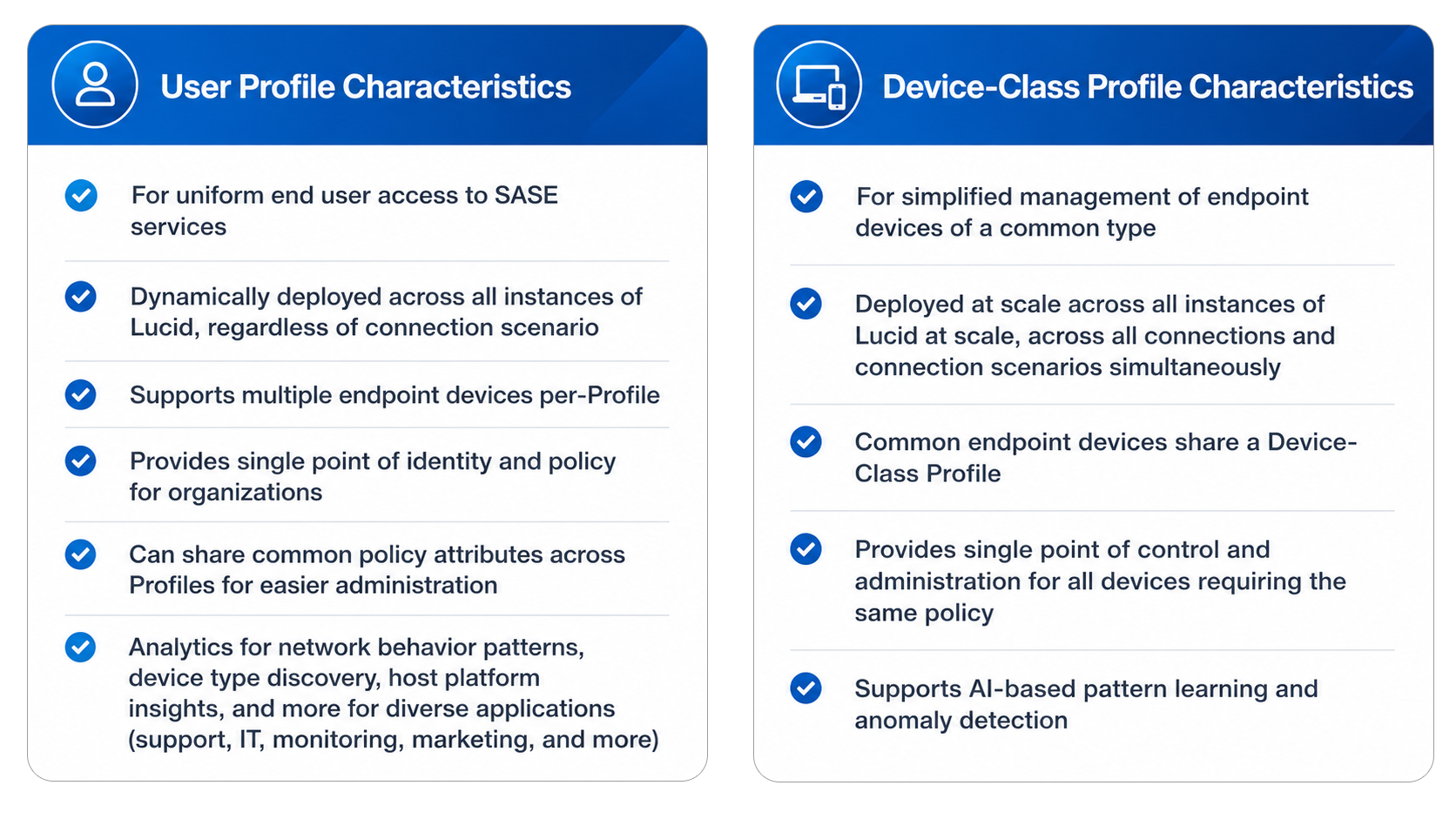
Each device, regardless of its prior interactions or status, undergoes a continuous authentication process based on identity with the option of biometric authorization. By monitoring the device's identity at the very edge of the network, Lucid ensures a secure environment where only recognized and authenticated devices gain access.
A Single Pane of Glass View of Network Performance and Analysis
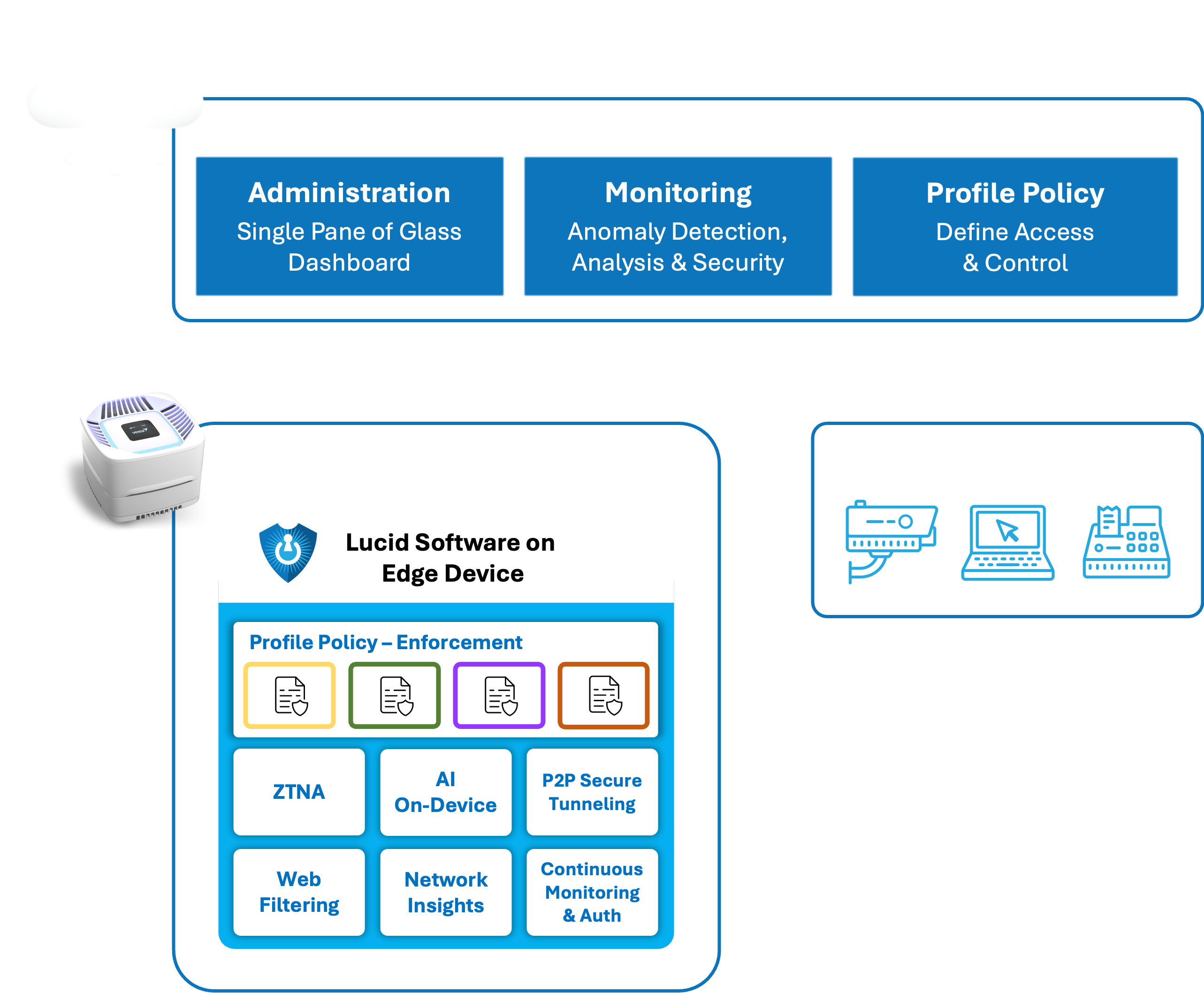
Lucid provides an end to end view of connectivity and network performance. The system provides a single pane of glass view into live traffic monitoring and historic analytical data for all network elements and traffic.

End to End Network Monitoring for Security and Optimal Performance
Lucid not only monitors the entire network for potential threats, it also provides insights into the operation and connectivity of the network. These insights can be integrated directly into existing management systems or be operated as a separate view into the network. Lucid's cloud management system facilitates unparalleled analysis and control of network elements at scale.

AI Threat Detection and Response
CyberLucent's integration of AI goes well beyond basic monitoring. By analyzing patterns and behaviors, the system can proactively identify and flag potential threats, often predicting vulnerabilities before they can be exploited.
Lucid's active anomaly detection provides the ability to monitor live traffic and use pattern recognition in combination with Deep Packet inspection to alert and isolate security issues.

Automated Risk Response and Reporting
With the use of AI, network administrators are no longer bogged down by manual monitoring. The Lucid platform offers actionable insights, highlighting vulnerabilities, analyzing device behaviors, and recommending responses. This enables proactive network management. Custom, automated actions can be set depending on an event detection (e.g., notify and/or de-authorize), allowing for rapid security responses. All non-policy conforming traffic triggers a notification and, if warranted, is blocked.
Evolving New Threats
Continual learning and adaptation are cornerstones of AI. Over time, the Lucid platform leverages AI to learn from the network's interactions, adapting and optimizing its defense mechanisms to constantly advance security and remain ahead of new and emerging threats.
Zero Trust Isolation for All Devices
Zero Trust Security revolves around the notion of "trust no one, verify everything". CyberLucent has adopted the core principles of Zero Trust within its Lucid platform. In contrast to legacy systems that deem any device connected to the same wireless network as trusted, CyberLucent provides an effective structure for full device isolation.
Edge Based Isolation
The Lucid software operates at the edge, residing on a container that exists on all types of gateways. Lucid allows all devices to be isolated from other devices without the need for agents, allowing isolation of even the most simplistic IoT devices connected to the network. Each endpoint, whatever it is, is isolated from other devices and operates on its own data path through secure WireGuard tunnels. This isolation prevents any potential lateral attacks from other device son the same network.
Lucid extends isolation and security capabilities not only down to a single user’s laptop, smartphone, or tablet it extends to everything connected to the network. Mobile and remote users will be protected from other devices connected to network.

End to End Isolation and Protection
CyberLucent has paired the best practices of cybersecurity with network simplicity by transforming the conventional wide-net trust model into a fully end to end isolated network with Role Based Access Control (RBAC), combined with individual & isolated WireGuard encrypted tunnels.
Well Beyond Traditional SASE — Future Proof
Lucid is a fully SASE compliant solution, that goes well beyond what traditional SASE based approaches provide today. Lucid isn’t hampered by poor isolation of devices running on the same network and, because it runs on the edge, it allows for end to end isolation and protection. By allowing full isolation of all devices, simplified network connectivity and secure, isolated tunnels throughout the network, Lucid fully supports distributed work forces and IoT use cases for maximum flexibility, performance and security.

Network Connectivity, Simplicity, and Performance through a Virtual Mesh Network Overlay
As the digital landscape grows and evolves, so does the demand for faster, more reliable network infrastructure. To augment network performence, CyberLucent utilizes a mesh network overlay comprised of secure WireGuard tunnels. In addition to better performance, CyberLucent's approach dramatically reduces the complexity of network management.
The WireGuard protocol uses new encryption technology and network code to create an encrypted tunnel between the gateway and X-Node. Its unique design and encryption methods emphasize both speed and security, enabling Lucid to deliver a product that is not only safer than legacy solutions but faster too.
Lucid in Legacy Systems:

No Complex VPN or SD-WAN to Administer
CyberLucent has addressed the complexities and potential issues with traditional VPN and SD-WAN systems. Lucid can work within legacy systems or, if desired, be used to eliminate the need for VPNs and SD-WAN altogether.
Companies using Lucid bypass the cumbersome configurations, continuous patching, and administrative overhead typically associated with VPN and SD-WAN. Instead, Lucid provides a streamlined, fully SASE-compliant, integrated solution that provides robust security, faster/lower latency connectivity, and a user-friendly interface.
CyberLucent's innovative approach is rooted in the utilization of modern technologies such as WireGuard and standard’s based containers and a deep understanding of networking security. This ensures that organizations can protect themselves and their employees without wading through the complexities and potential pitfalls of conventional VPN, CASB, or SD-WAN administration.
Unified Point to Point Network
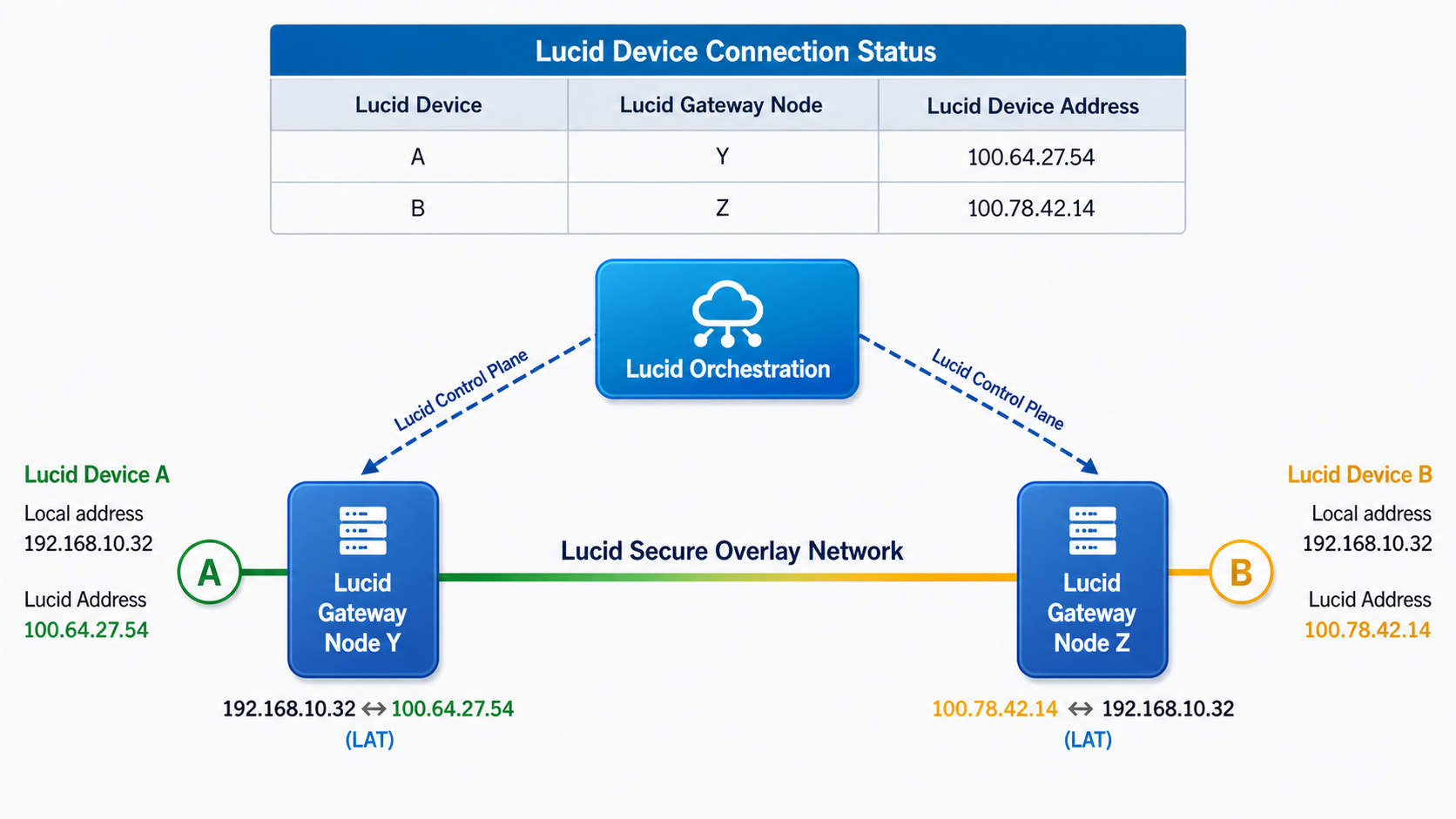
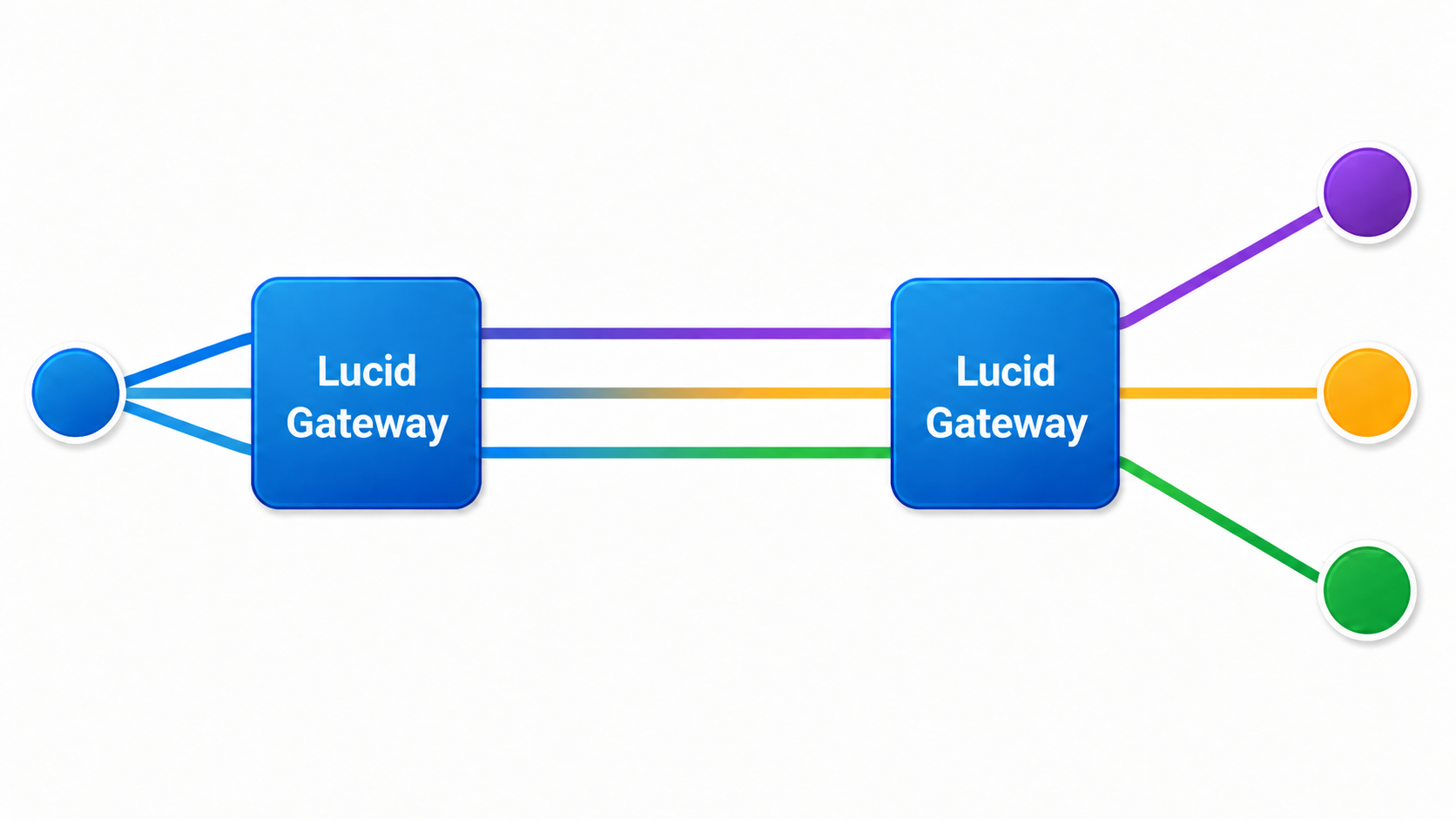
Lucid creates a single, unified LAN for all Lucid Devices within an organization and removes the need for complex network planning, routing, and address space management. Lucid provides for automatic IP address assignments, which dramatically simplifies network management.
Routing Rules and Access Rules
Lucid provides both routing rules and access rules that simplify network communication. For use cases that require packets to be routed to an external networks such as legacy LAN networks and the internet, Lucid allows routing rules that define the flow of packets.
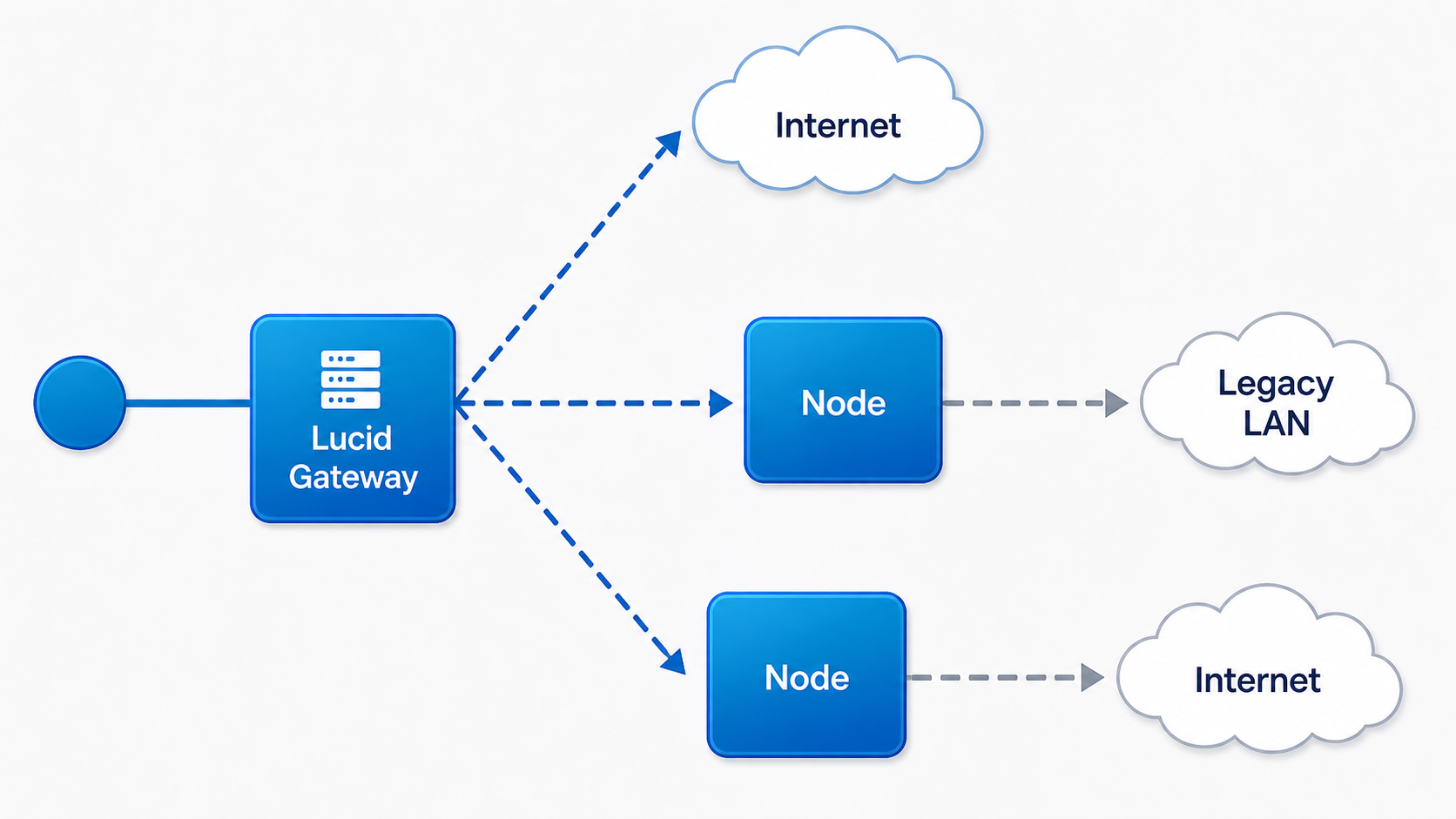
For use cases that require communications between Lucid Devices, Lucid access rules consider the connection points and network address required to facilitate connection.
Edge Devices are an Ideal Place to Process Data for AI Applications
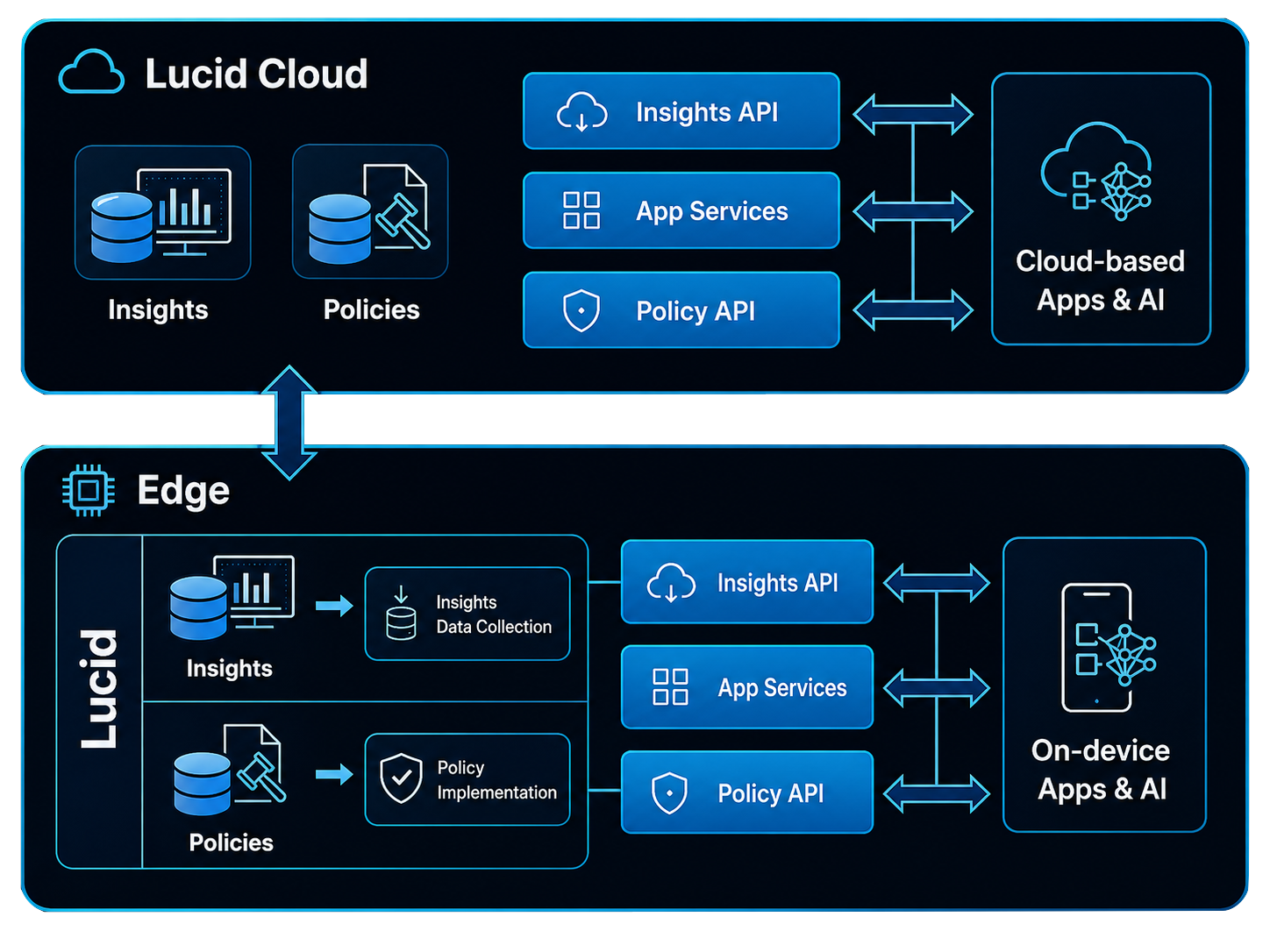
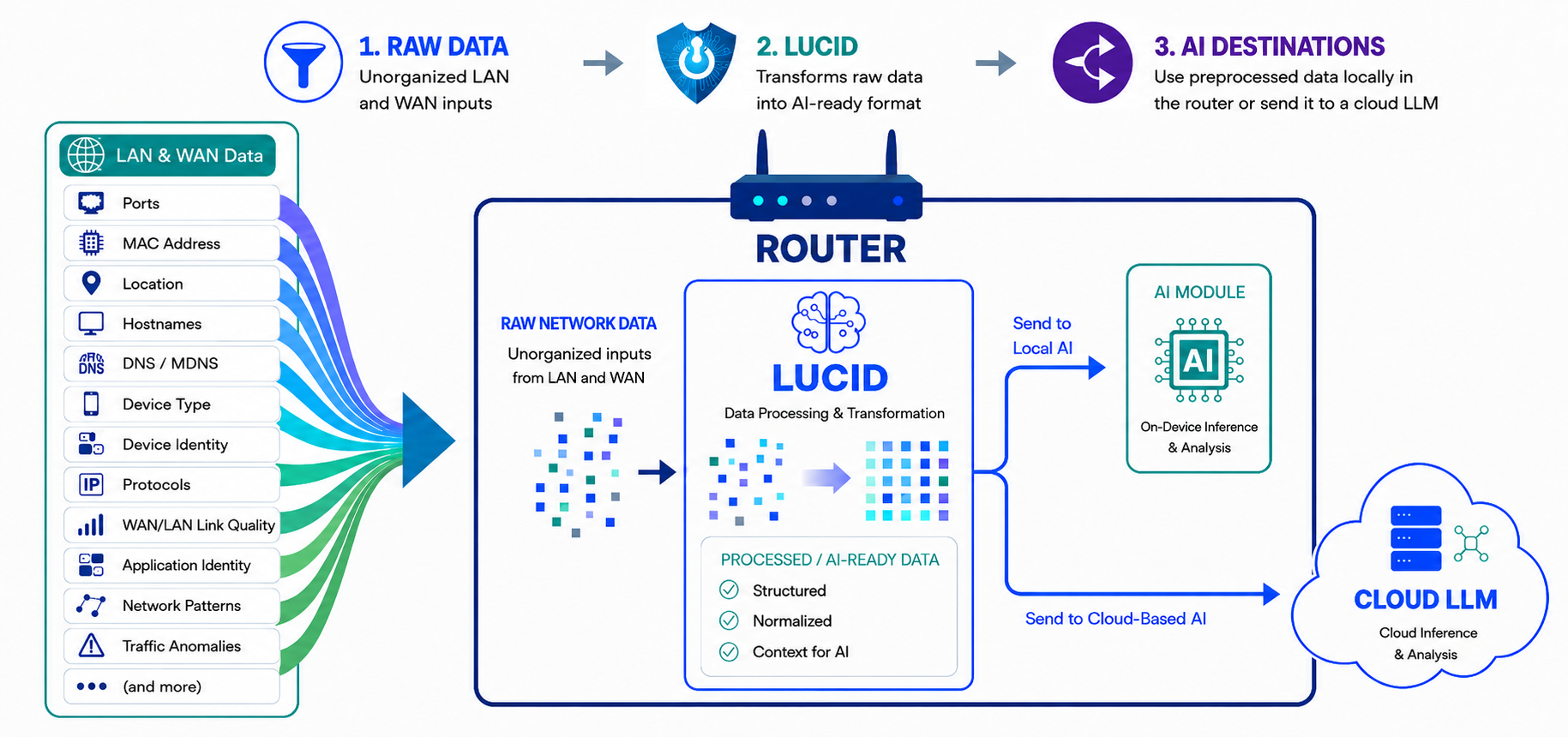
An immense amount of information passes through edge devices / routers. Lucid lives on these devices and processes all information flowing through the network, positioning it as a valuable asset to the growth of AI.
CyberLucent Supports the Migration from Running AI in the Cloud to Running AI Locally on Edge Devices, Routers, and Endpoint Devices
AI will become unsustainable, from a cost, latency and security standpoint, if data isn’t being either fully or partially processed locally at the edge – due to the cost of transferring huge sets of data to the cloud.
In addition to reducing costs, running AI locally will provide performance improvements that are critical for a variety of use cases (e.g., lower latency for IoT, robotics, medical procedures, and other AI applications).
Lucid is designed to help address these problems by first inspecting the vast amounts of data passing through an edge device / router and then packaging up that data in a way that makes it useful for an AI model small enough to run locally on a device.
Localized AI Reduces Costs and Increases Customer Satisfaction
CyberLucent's partners are combining Lucid's data insights and analysis with AI running locally on their routers to detect and fix issues before customers even notice them. This reduces costs by 1) minimizing the number of incoming customer support calls and 2) reducing customer churn due to better equipment performance and increased customer satisfaction.
AI-Based Detection/Response for Threats and Performance Issues
CyberLucent's integration of AI goes well beyond basic monitoring. By analyzing patterns and behaviors, the system can proactively identify and flag potential threats as well as LAN/WAN performance issues, often predicting vulnerabilities before they can be exploited and performance issues before they seriously impact the network.
Lucid's active anomaly detection provides the ability to monitor live traffic and use pattern recognition in combination with Deep Packet Inspection to alert and isolate issues. Beyond just detecting issues and threaths, Lucid can also act as the mechanism to direct and automate both the LAN and WAN responses to AI-detected performance issues, threats, LLM generated commands, and botnets. This is due to Lucid's positioning on the router.
This proactive approach to security — based on AI-centric anomaly detection — is necessary for the growing vulnerabilities in attack surfaces from the growth of IoT, leaving critical infrastructure, high density environments, government, and ISP networks exposed to increased levels of risk.
